
The Executive Function Project
Direct instruction in executive function skills — powered by research-based curriculum and professional development that make learning how to learn explicit, practical, and measurable.
Curriculum Pathway
Direct instruction in executive function skills from middle school through postsecondary transition.
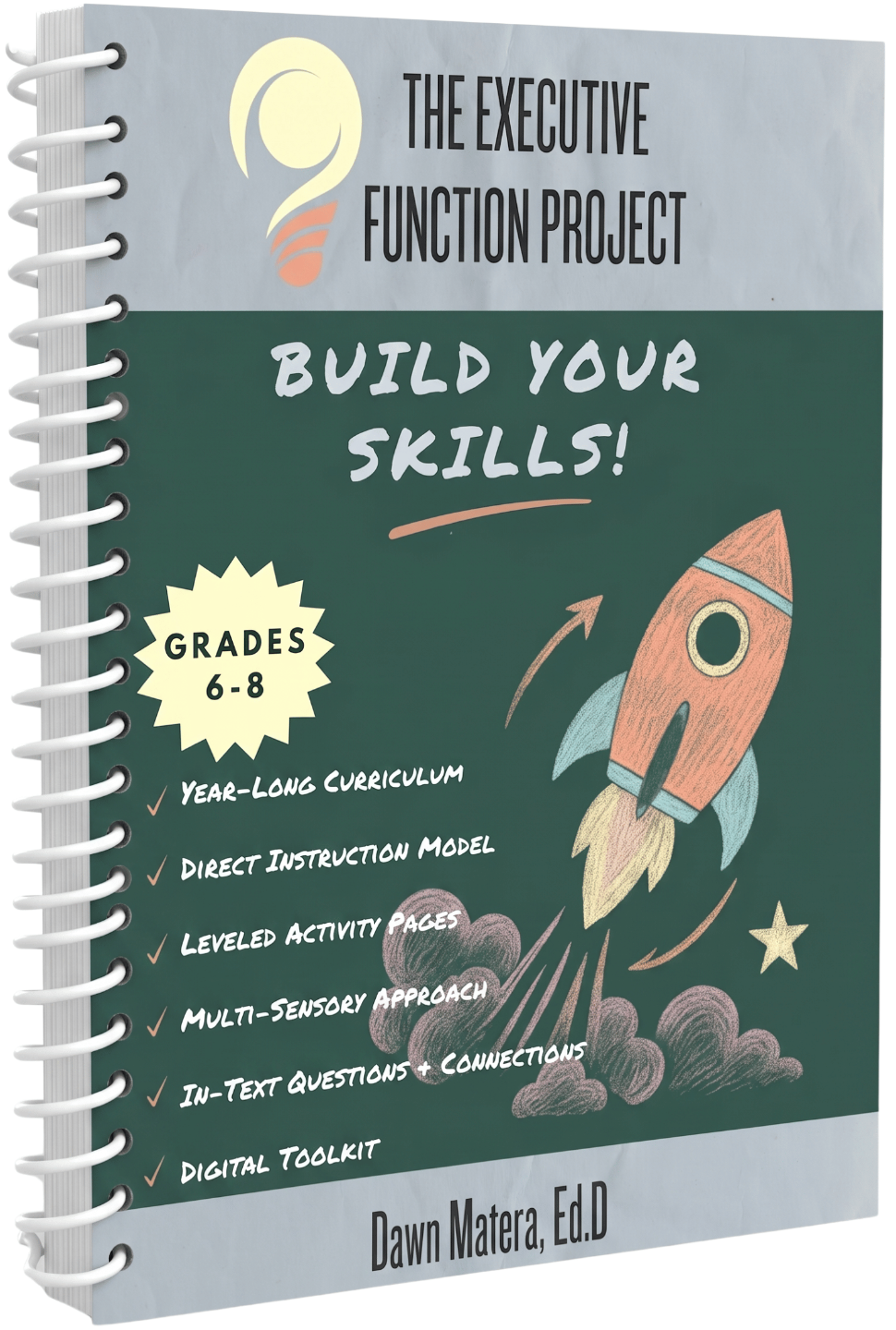
Structured and engaging instruction that strengthens core executive function skills and independence during the pivotal middle school years.
Build Your Skills!
Grades 6-8: Available Now!
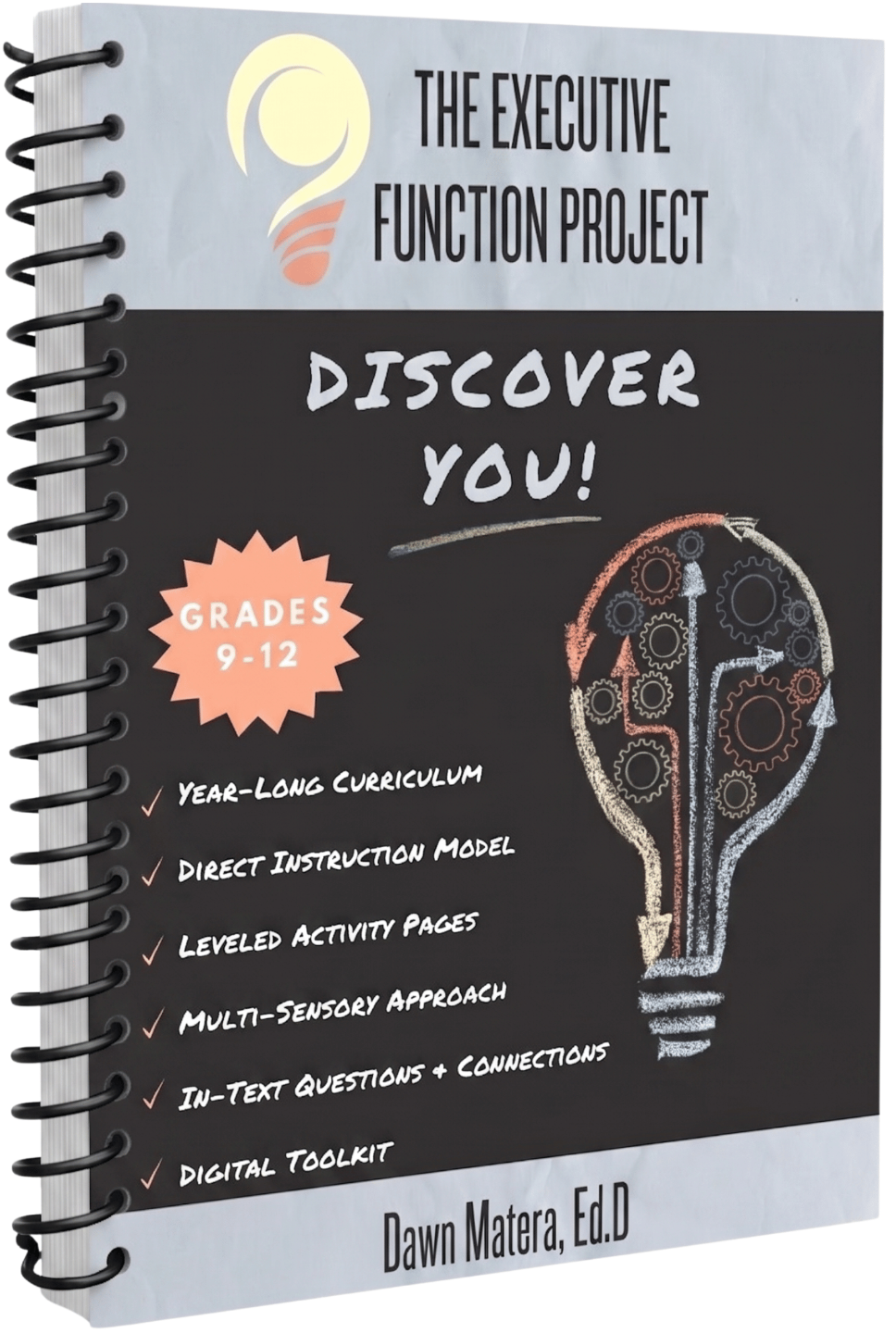
Direct instruction that equips high school students with the executive function skills needed for academic success and independence.
Discover You!
Grades 9-12: Available now!
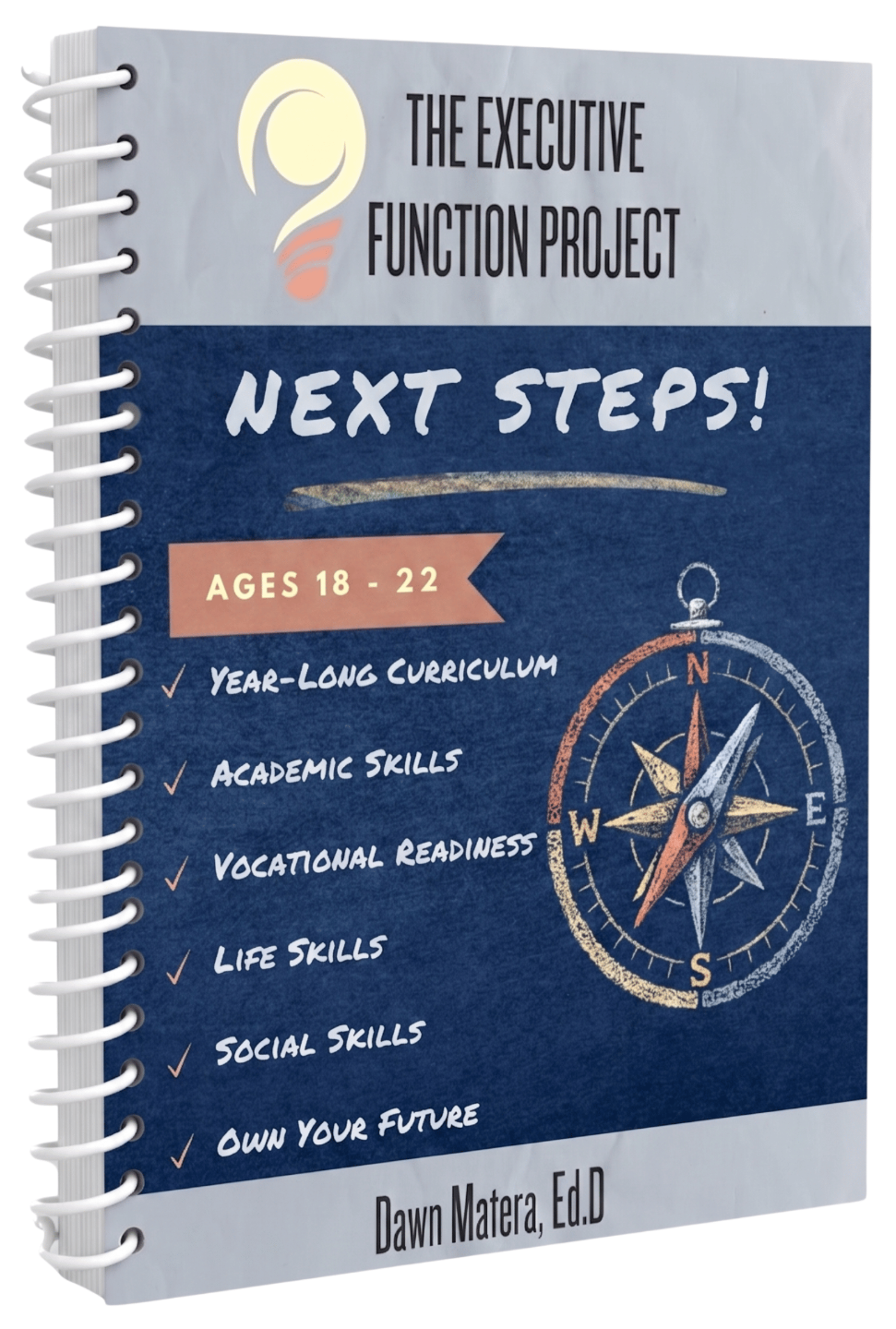
Practical executive function instruction supporting students as they transition to college, the workforce, and independent living.
Next Steps!
College & Career: Coming Soon!
View A Sample!
Why Executive Function Instruction Matters
In today’s classrooms, students are expected to plan assignments, organize materials, manage time, regulate emotions, stay focused, and monitor their own progress. These are not “soft skills” — they are the cognitive control systems that drive learning.
Yet in most schools, executive function skills are assumed, not taught.
When students struggle with organization, attention, task initiation, or self-monitoring, the result is frustration, underachievement, and lost potential — even when intelligence and motivation are high.
The Executive Function Project changes that.
Through direct, explicit instruction and structured practice, we teach students the brain-based skills that make learning possible — so they can become independent, confident, and successful learners.

Time Management:
Utilizing time by effectively allocating and prioritizing tasks.

Metacognition:
Being aware of how you think, reflecting on how your brain works, and being able to check and adjust your own thinking.

Goal Setting:
Sustaining effort towards a goal, even in the face of obstacles or challenges.

Self-Monitoring & Self-Talk:
Checking and evaluating self, emotions, and behaviors. Speaking in a way that improves mood and mindset.

Emotional Regulation:
Managing emotions with tolerance, frustration, and reactions appropriate to the situation.

Task Initiation:
Beginning a task without procrastination or barriers.

Working Memory:
Working with information without losing track of it.

Focus & Attention:
Focusing on certain stimuli in the environment while not focusing or “tuning out” distractions.

Cognitive Flexibility:
Thinking in such a way that you may change plans based upon new information in either the internal or external environment.

Organization:
Tracking and managing personal materials, schedules, the environment, and internal thoughts.

Planning:
Creating a roadmap to accomplish a goal by breaking it down into manageable steps and organizing resources effectively.

Prioritizing:
Identifying the most important tasks or goals and allocating time and resources accordingly, with critical objectives being met first.
Who We Serve
Schools & Districts
Educators
Students
Parents & Families
Subscribe to The Executive Function Project's Newsletter to get updates on our newest projects and events!
We won't send spam. Unsubscribe at any time.